Interstellar 5

Homework:
Heavy duty vocab 1 : TEST 1.1 (trouver la signification des noms présentés sur la fiche)-> cf photo pour les élèves absents.
Interstellar, the Wave
Laurine:
After : in the space station, Internet
Arnaud:
protagonist, planet nly water and waves.
the pilot manages to stay alive
Joan:
3 people, after their landing, they go on the planet to find a place where the signal comes from, after that, they see a great big wave
Axel:
3 characters, planet with water only, all the hour giant waves, the crew is blocked
Denise :
one of the characters die
Camille
there is another planet, they try to fnd someone, to salvage info, they thought there were mountains, but they were giant waves, one dies
Raïssa
they arrive on a planet where time passes very fast... water planet /
Lucie
Water planet / Mountains vs waves their ship resist, Brand / cooper
Julie
crew, can humans live here ? huge wave... run for their lives, tragically / debate about gravity and travelling through time and dimensions
The scene starts with the landing of the ship. It corresponds to Cooper's nightmare almost shot by shot. Then we get to see a long shot of the sea. It's depicted as an ancient, primordial ocean. The non-diegetic music kicks in, and the theme features the tick tock of a clock, as Cooper reminds the crew of the stakes (Make it count).
The characters are shown through close ups, and through the point of view of Cooper, who stays in the ship. When he finally realizes the mountain range really is a wave, there's a pan shot, going up. It reveals the scale of that monstrous wave, and Zimmer's score shifts from minor chords into a majestic major chord. It conveys a sense of awe. The wave fills the frame like in Alain Resnais's Night & Fog (1955). This wave is also reminiscent of The Wave by Hokusai.
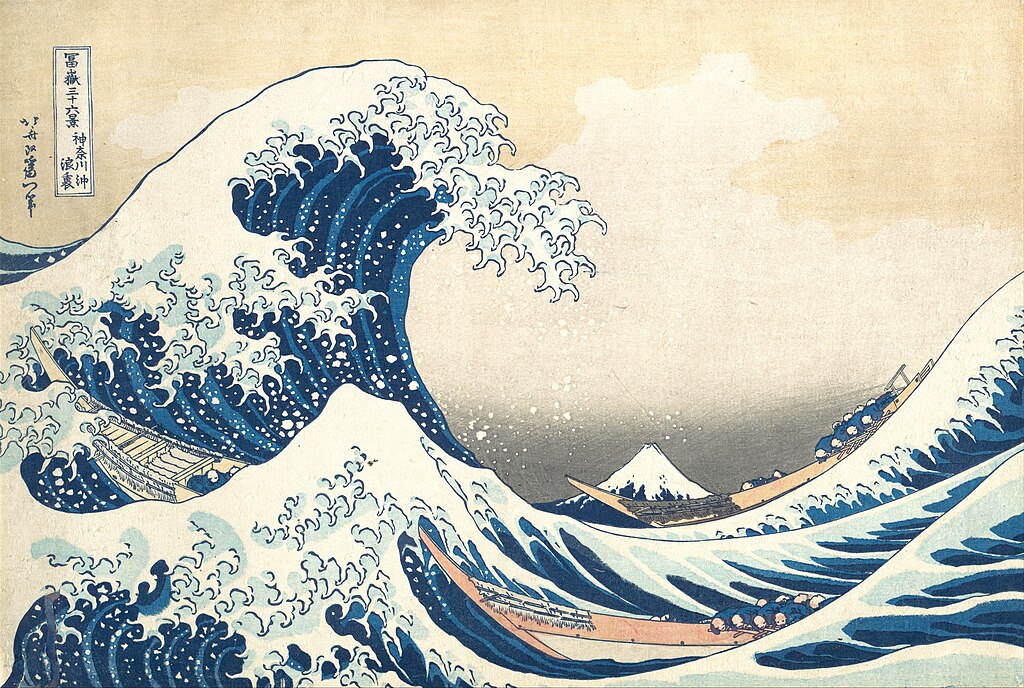
Hokusai's work, as well as the wave in Interstellar, reveals the frailty (la fragilité) of human life. Like Fate (destiny), the water is inescapable, it ignores good or evil, and the characters can't do anything about it, their efforts are futile. Yet, Brand chooses to disobey Cooper's orders, and Doyle dies because of her arrogance in the face of the wave. It's an act of Hubris (pride in Greek), and Doyle becomes a Tragic Hero.
When Brand and Cooper have their conversation, Cooper muses about (thinks about) the nature of time, and he has a hunch (an intuition) as he keeps looking at the right of the frame : maybe they could go through a black hole and communicate from the future. He basically announcing the end of the movie. Strangely enough (bizarrement), CASE doesn't tell them about the incoming wave up until the very last minute. He could have interrupted them, but it seems he wanted them to have that essential conversation. Could CASE know about the end of the movie? Then there's an ellipsis (time slippage), because time in the movie goes faster than in real life, just like on the planet. In the end, the shuttle takes off (a topos, a cliche of science-fiction), and Doyle body is left behind, forever trapped in time. This scene could be considered as a purple patch.
a chord :
the scale
to kick in
to convey
to shift from x to x
the stakes
- Introduce and sum up your text briefly
- 5 to 7 new words?
- Protagonist(s)
- How can you show that this is science-fiction
- Link with encounters / imagination?
- Introduce and sum up your text briefly
So Many Things To Learn (Dune, Frank Herbert, 1965)
Are They A Reason For Going ? (Pale Blue Dot, Carl Sagan, 1997)
It's Just A Silly Dream (Childhood's End, Arthur C. Clarke, 1953)
The Rocket (The Illustrated Man, Ray Bradbury, 1951)
An Insignificant Little Blue Green Planet (The Ultimate Hitchhiker's Guide..., Douglas Adams, 1983)
- 5 to 7 new words?
So Many Things To Learn (Dune, Frank Herbert, 1965)
Are They A Reason For Going ? (Pale Blue Dot, Carl Sagan, 1997)
It's Just A Silly Dream (Childhood's End, Arthur C. Clarke, 1953)
The Rocket (The Illustrated Man, Ray Bradbury, 1951)
An Insignificant Little Blue Green Planet (The Ultimate Hitchhiker's Guide..., Douglas Adams, 1983)- Protagonist(s)
So Many Things To Learn (Dune, Frank Herbert, 1965)
Are They A Reason For Going ? (Pale Blue Dot, Carl Sagan, 1997)
It's Just A Silly Dream (Childhood's End, Arthur C. Clarke, 1953)
The Rocket (The Illustrated Man, Ray Bradbury, 1951)
An Insignificant Little Blue Green Planet (The Ultimate Hitchhiker's Guide..., Douglas Adams, 1983)- How can you show that this is science-fiction
So Many Things To Learn (Dune, Frank Herbert, 1965)
Are They A Reason For Going ? (Pale Blue Dot, Carl Sagan, 1997)
It's Just A Silly Dream (Childhood's End, Arthur C. Clarke, 1953)
The Rocket (The Illustrated Man, Ray Bradbury, 1951)
An Insignificant Little Blue Green Planet (The Ultimate Hitchhiker's Guide..., Douglas Adams, 1983)- Link with encounters / imagination?
So Many Things To Learn (Dune, Frank Herbert, 1965)
Are They A Reason For Going ? (Pale Blue Dot, Carl Sagan, 1997)
It's Just A Silly Dream (Childhood's End, Arthur C. Clarke, 1953)
The Rocket (The Illustrated Man, Ray Bradbury, 1951)
An Insignificant Little Blue Green Planet (The Ultimate Hitchhiker's Guide..., Douglas Adams, 1983)- Introduce and sum up your text briefly
- 5 to 7 new words?
- Protagonist(s)
- How can you show that this is science-fiction
- Link with encounters / imagination?


Commentaires
Enregistrer un commentaire